
Moving to Phuket: The Before-You-Fly Checklist
Choose your visa route first: visa-exempt entry covers tourism stays of up to 30 days, and longer plans need a tourist, DTV, LTR or Non-O visa. A dog or cat needs an import permit, applied for 7 to 60 days before departure. Submit the free arrival card 3 days before landing.
Work it out for your datesThailand move plannerA dated checklist from your arrival date: which step is due when, with the rule and source behind every date.On this page
Do these five before you book or fly
Every deadline below counts back from your flight date. Fix that date first, then let the move planner turn your arrival date into a dated list.
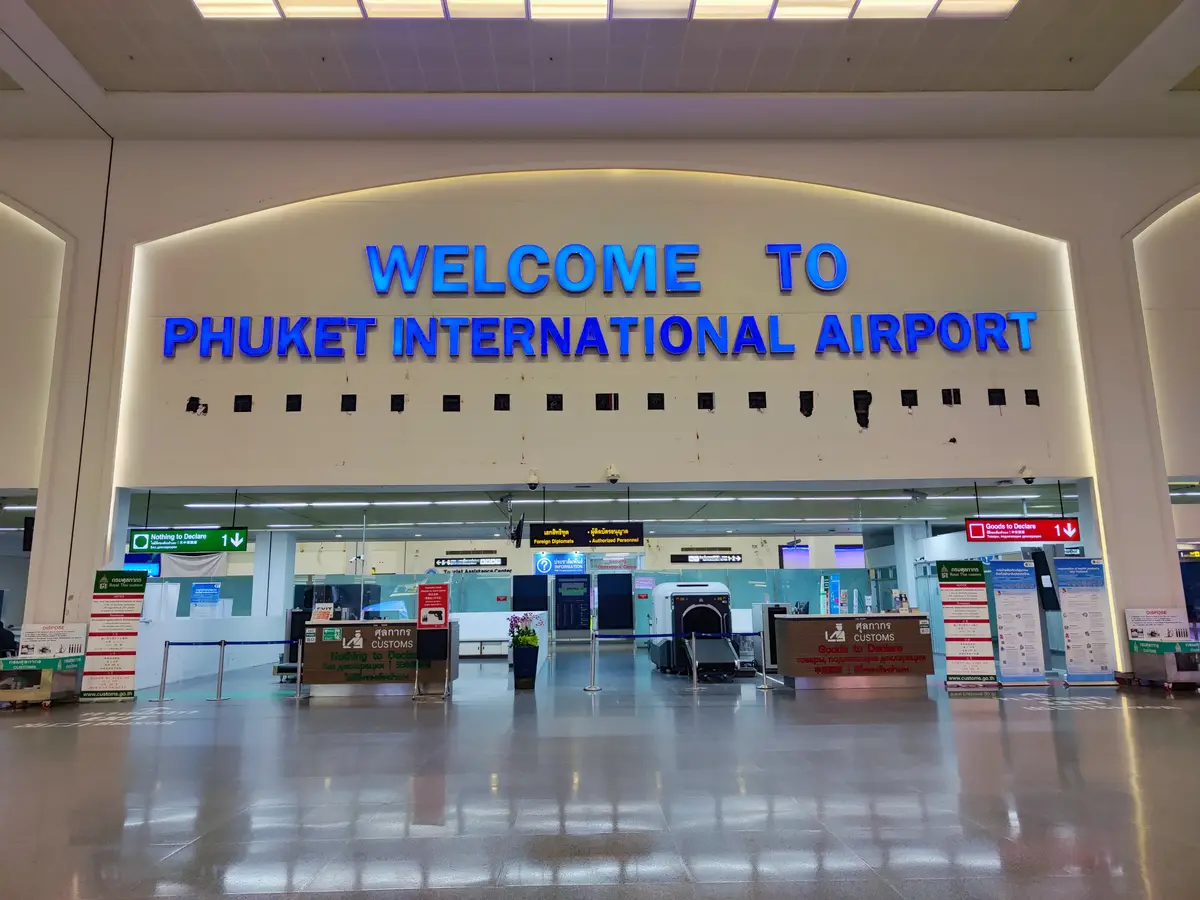
| Step | Deadline |
|---|---|
| Visa route | Non-O family visa: apply at least 15 working days before travel |
| Insurance | Before the LTR or O-A application |
| Pet permit | 7 to 60 days before departure |
| School place | Applications open at any time during the school year |
| Arrival card | 3 days in advance of arrival |
The jobs that come after landing, such as the address notice, bank, SIM top-up and immigration office, wait in the first-week checklist. This page stays with the steps before the flight.
Pick your visa route
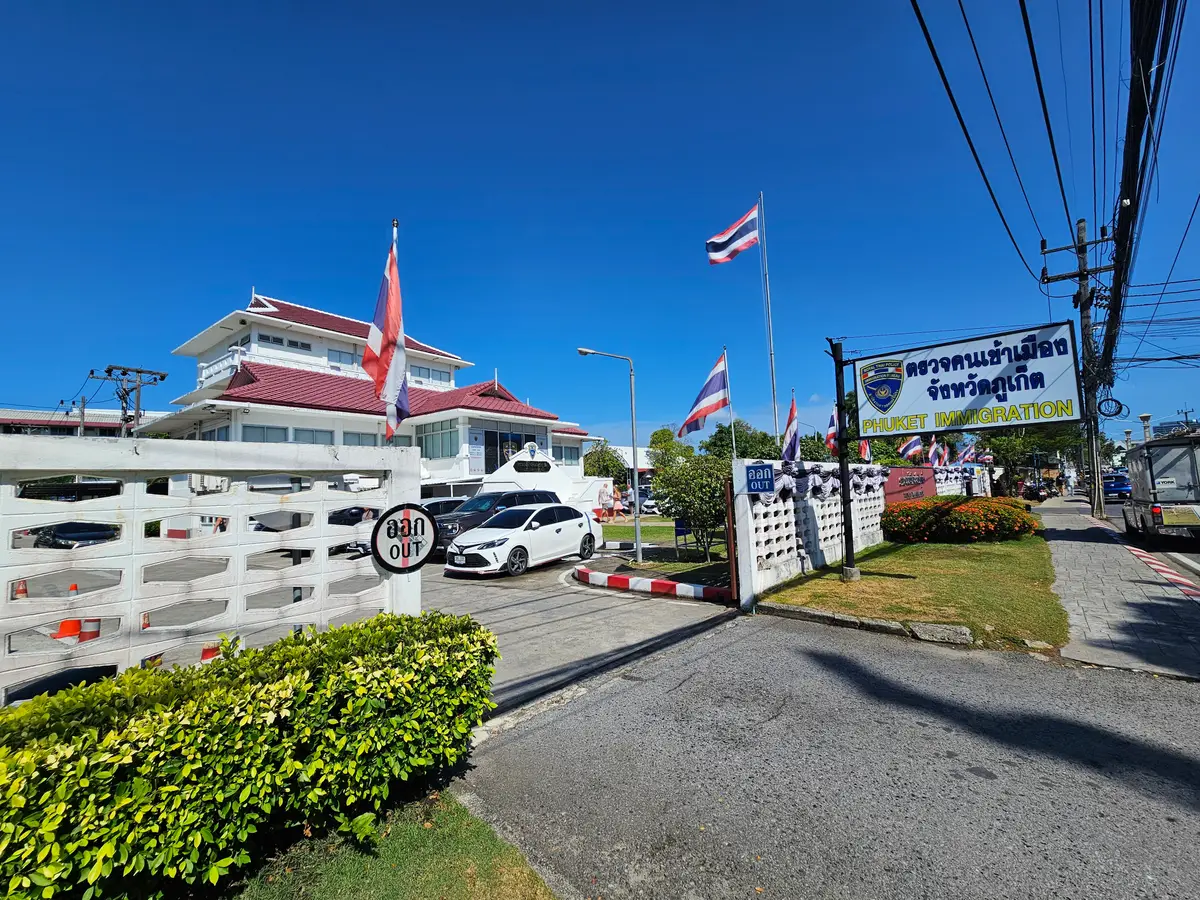
Visa exemption is the first thing to check: nationals of 60 countries and territories are eligible for stays of up to 30 days for tourism, effective 15 September 2026. Find your nationality on your embassy’s list before you rely on it, and read the visa exemption guide for the detail.
If you enter visa-exempt
At the border, have both of these ready: proof of accommodation and proof of onward travel scheduled within 30 days of arrival. Officers may also ask for more documents, such as proof of sufficient funds, or hold an interview, so keep those papers close.
Staying longer means asking for an extension, and you may request one of up to 30 days at the Phuket Immigration Office. The fee is THB 1,900 (as of 2019), and the extension is at the immigration officer’s discretion. Walk through the steps in the extension guide.
Visa on Arrival, for its part, allows up to 15 days, for nationals of 3 countries and territories.
If you need a tourist visa
A Tourist (TR) visa is for tourism, a short visit or medical purposes, with a stay of up to 60 days. Each embassy sets its own checklist, and yours is the one to follow. At the Oslo embassy, for example, the list covers:
- Your passport or travel document, with validity not less than 6 months.
- Your travel booking, showing full flight ticket details, your name and the booking reference.
- Proof of accommodation that shows your full name and length of stay.
- Evidence of adequate finance, set at 20,000 baht per person.
If you plan to stay longer
DTV (remote work). The DTV is built for travellers who work remotely, such as freelancers and digital nomads. Apply online at thaievisa.go.th and show financial evidence of at least 500,000 baht. Once issued, it is valid for 5 years, with a maximum of 180 days per entry.
An extension of 180 days may be granted at the Immigration Bureau. Remote work itself is shown, at one embassy, with an employment contract or certificate, or a professional portfolio. The DTV guide covers the rest.
LTR. The LTR is a 10-year renewable visa in four categories: 5 years first, then 5 more if the qualifications are still met. Applications go online only, through ltr.boi.go.th, and the processing fee is THB 50,000 per person when you collect the visa in Thailand. Read the LTR guide before you start.
Non-O for a Thai spouse. This route serves the spouse of a Thai national, and the first stay does not exceed 90 days. Bring the marriage certificate and a copy of your Thai spouse’s ID card, and submit at least 15 working days before travel. The Non-O guide and the children and spouses guide cover it in full.
To weigh the routes side by side for a Phuket stay, open the visa types guide.
Insurance for long-stay visas
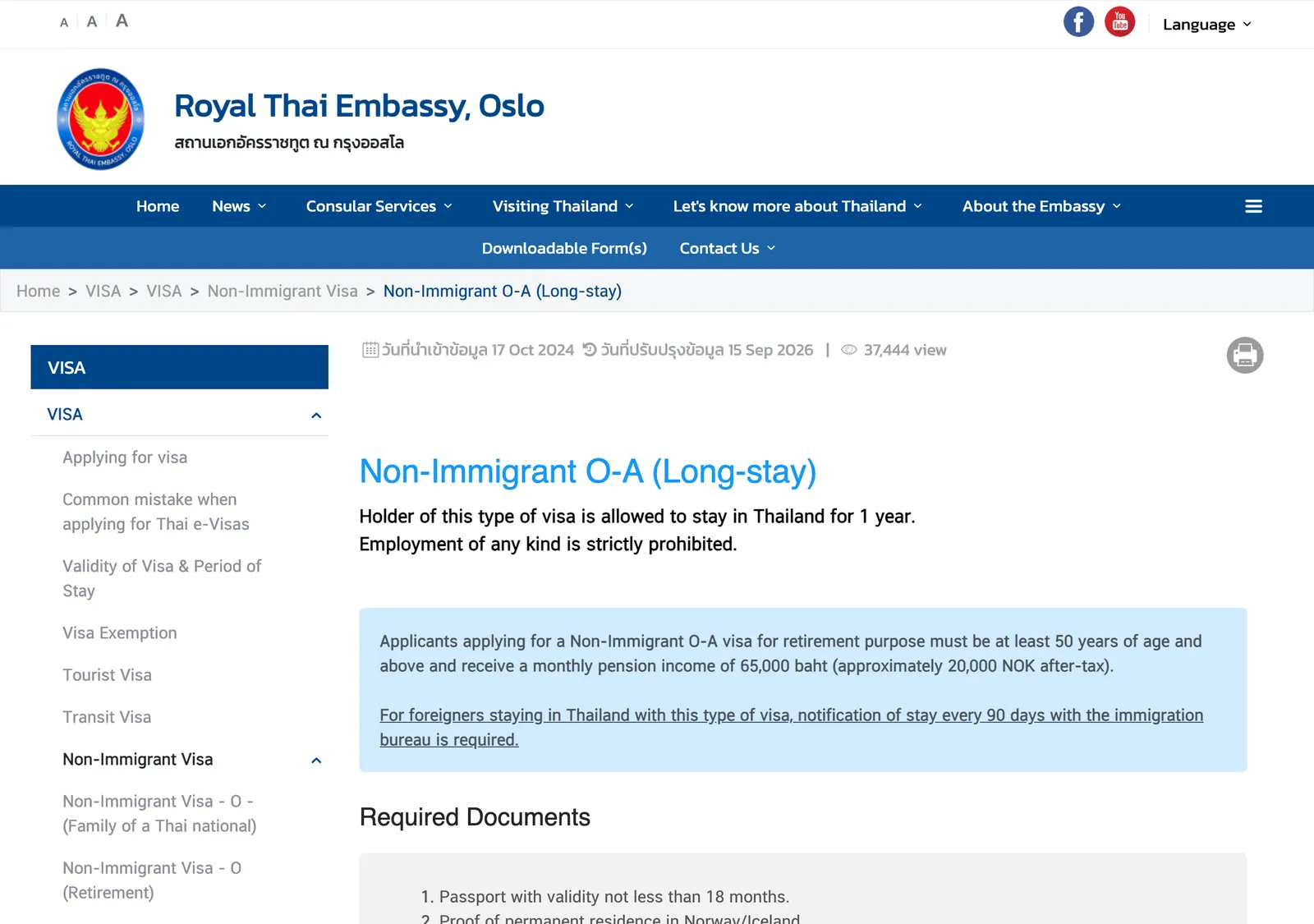
Sort out insurance before you apply, because both the LTR and the O-A retirement extension set a condition on it. Across all four LTR categories, that means health insurance of at least USD 50,000.
Without a policy, the alternatives are social security benefits in Thailand, or at least USD 100,000 in a bank account under your name. Choose the deposit and the money is retained for at least 12 months as of the application date.
The O-A retirement extension sets a higher bar: insurance must cover at least USD 100,000 or THB 3,000,000 for the entire stay. Both the health insurance guide and the retirement extension guide go deeper.
Pets need an import permit
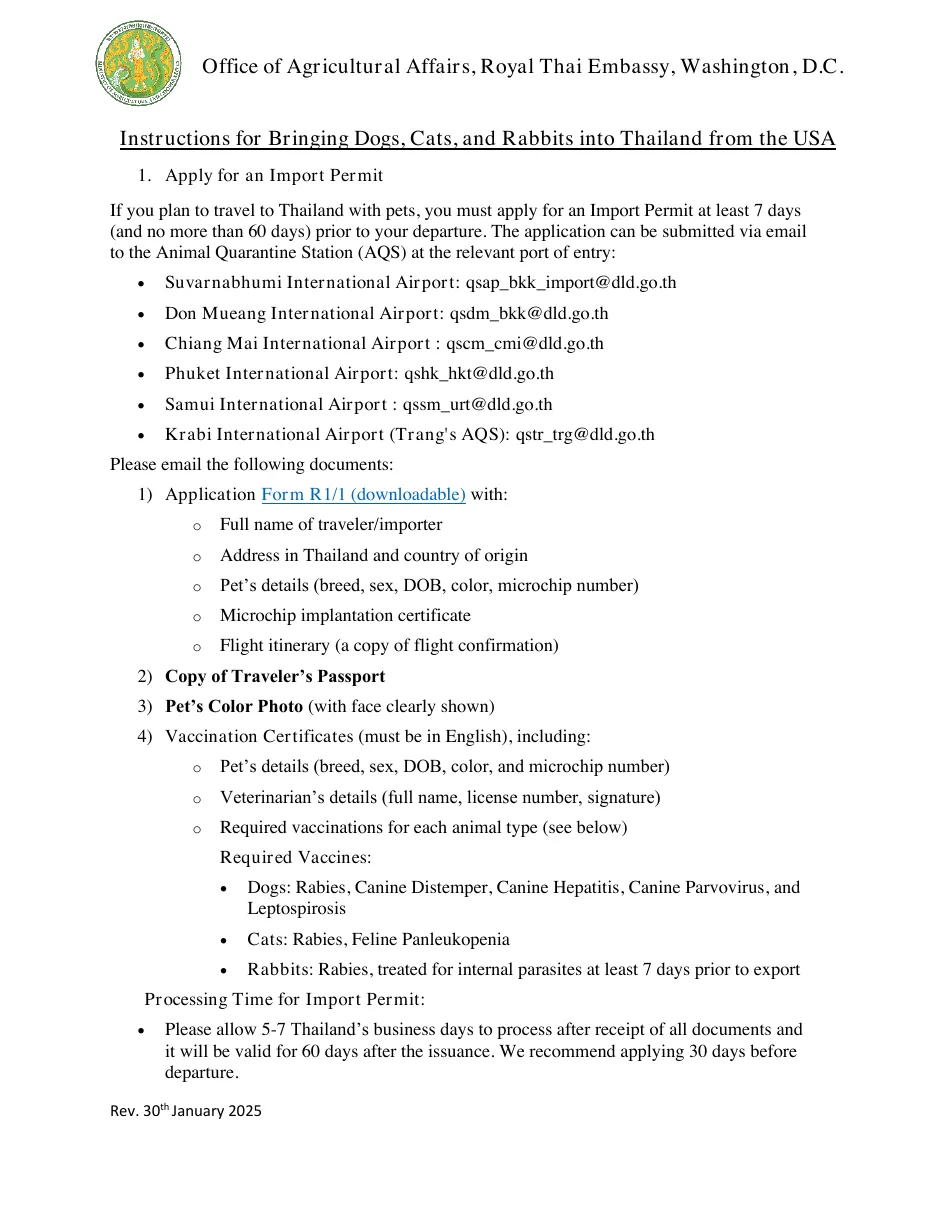
Begin with the vaccines, because the permit application waits on them. Then work through the steps in this order:
- Vaccinate first. Dogs need rabies, canine distemper, canine hepatitis, canine parvovirus and leptospirosis, while cats need rabies and feline panleukopenia.
- Wait 21 days after the primary vaccines, then start the import-permit application.
- Collect the microchip implantation certificate and vaccination certificates in English.
- Email your import-permit application at least 7 days and no more than 60 days before departure.
- Expect processing to take 5-7 Thai business days after all documents arrive; the permit is valid for 60 days after issue.
- Ask your airline early, since some require the import permit before boarding. No dog breeds are banned from importation, though airlines may set their own restrictions.
For the airport side, see the pet guide; for care after you land, the vets guide.
School places

Start on schools before you choose an area: international schools in Phuket take applications on their own timetable. Three of them publish 2026-2027 fees:
| School | Fee line | Annual fee |
|---|---|---|
| British International School, Phuket (BISP) | Year 1 | THB 750,000 |
| UWC Thailand | Grade 1 to 5 | THB 753,500 |
| QSI Phuket | Ages 5 to 13 | USD 15,100 |
BISP is an English-medium, co-educational day and boarding school, established in 1996, for students aged 2-18. You can apply mid-year, since BISP accepts applications for entry at any time during the school year.
BISP’s Intensive English Programme is delivered as part of the school day. To reach admissions, call +66 (0) 76 335 555.
UWC Thailand takes the International Baccalaureate route, with a continuum education from Pre-Kindergarten to Grade 12, day and boarding. Its fee line sits in the table above.
Compare every school in the international schools guide and the fees guide. Once the school is settled, the home follows: the where to live guide and the areas comparison pick up from there.
Money and tax ID
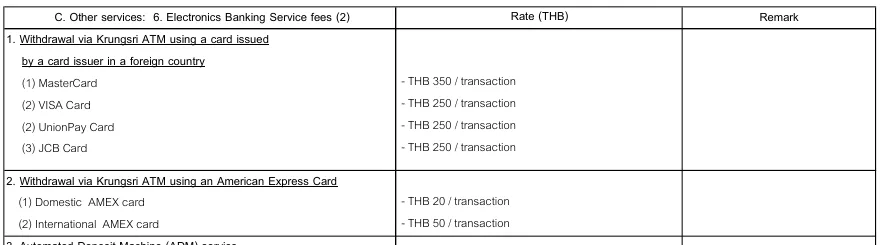
Your first cash will come from a Thai ATM and your home card, and each withdrawal carries a fee per transaction. Plan fewer, larger withdrawals.
| ATM and card | Fee per transaction |
|---|---|
| Kasikornbank, Visa withdrawal | THB 250 |
| Kasikornbank, MasterCard withdrawal | THB 350 |
| Krung Thai ATM (as of 2023) | 220 baht |
With a Visa card, Kasikornbank comes in below its MasterCard rate. The same table that lists the Krung Thai fee also sets a currency conversion fee of 4% of the amount withdrawn, in the currency of the issuing bank.
Open a Thai bank account once you have landed. With the account in place, PromptPay links it to your citizen ID or phone number. For more depth, try the ATM fees table, the bank account guide and the currency exchange guide.
Keep a running count of your days in Thailand, as stays of one period or several add up to decide residence for the tax year. Spend fewer than 180 days in the tax year and you are a non-resident for tax purposes.
For a tax resident, income earned abroad from 1 January 2024 onwards is taxed only if remitted to Thailand. The tax residency guide lays out how that works.
A tax ID (TIN) goes hand in hand with Thai-taxable income. A foreigner present for one period of up to 14 days and up to 90 days in total in a tax year does not need one.
Once you derive assessable income, apply within 60 days on Form L.P. 10.1. For Phuket, the Area Revenue Office sits at 23 Narisorn Road, Talat Yai, Mueang, Phuket 83000. The form itself is in the tax ID guide.
Phone and eSIM
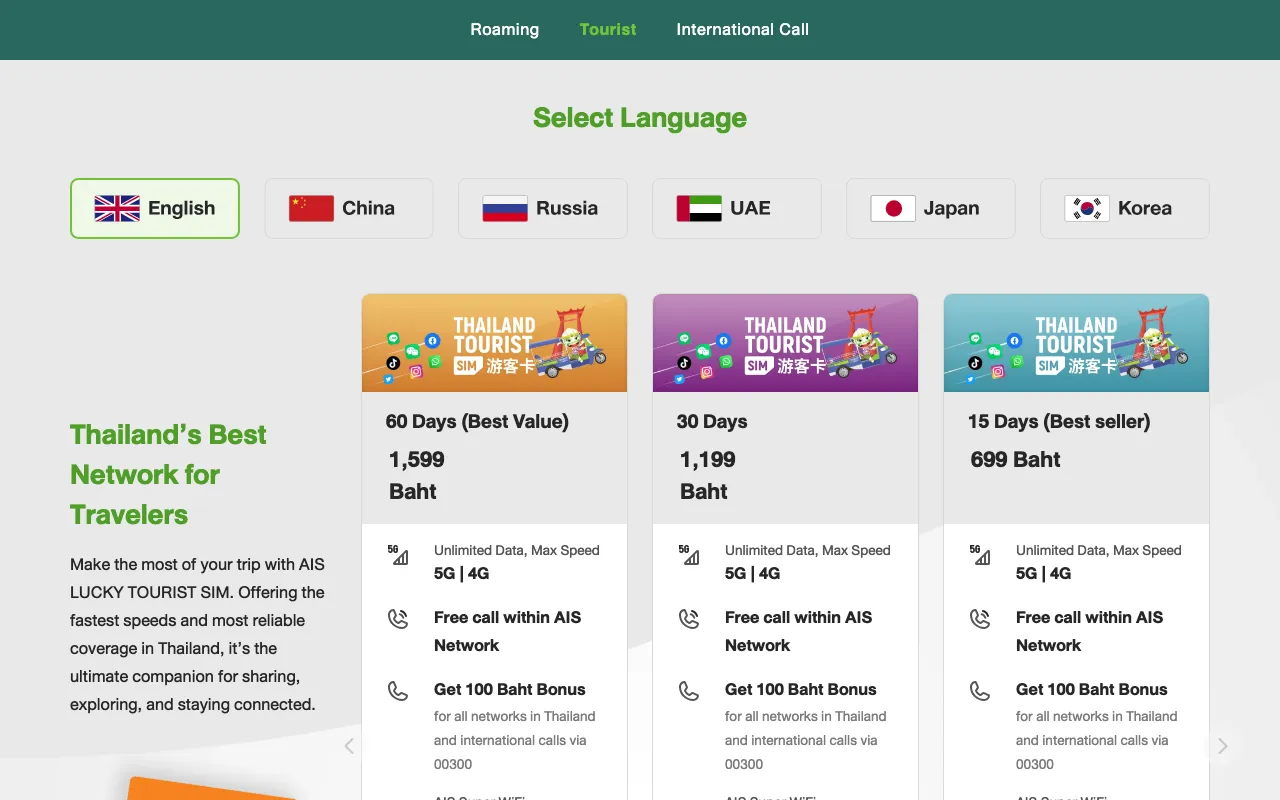
For a short stay, AIS and True cost the same over 8 days, while AIS also has a 30-day plan. For an eSIM instead, a visitor from abroad may buy a local one on the AIS network online.
| Tourist SIM | Validity | Price |
|---|---|---|
| AIS | 8 days | 499 baht |
| AIS | 30 days | 1,199 baht |
| True | 8 days | 499 THB |
Whatever you buy, register the SIM before you use it in Thailand. As a foreign national, send your passport number by SMS to 4444161 and follow the reply.
Then keep an eye on the clock: a number registered under an individual’s name must be activated within 60 days of registration, or identity verification is required again. For prices and counters, turn to the SIM and eSIM guide; home Wi-Fi sits in the home internet guide.
The arrival card, last
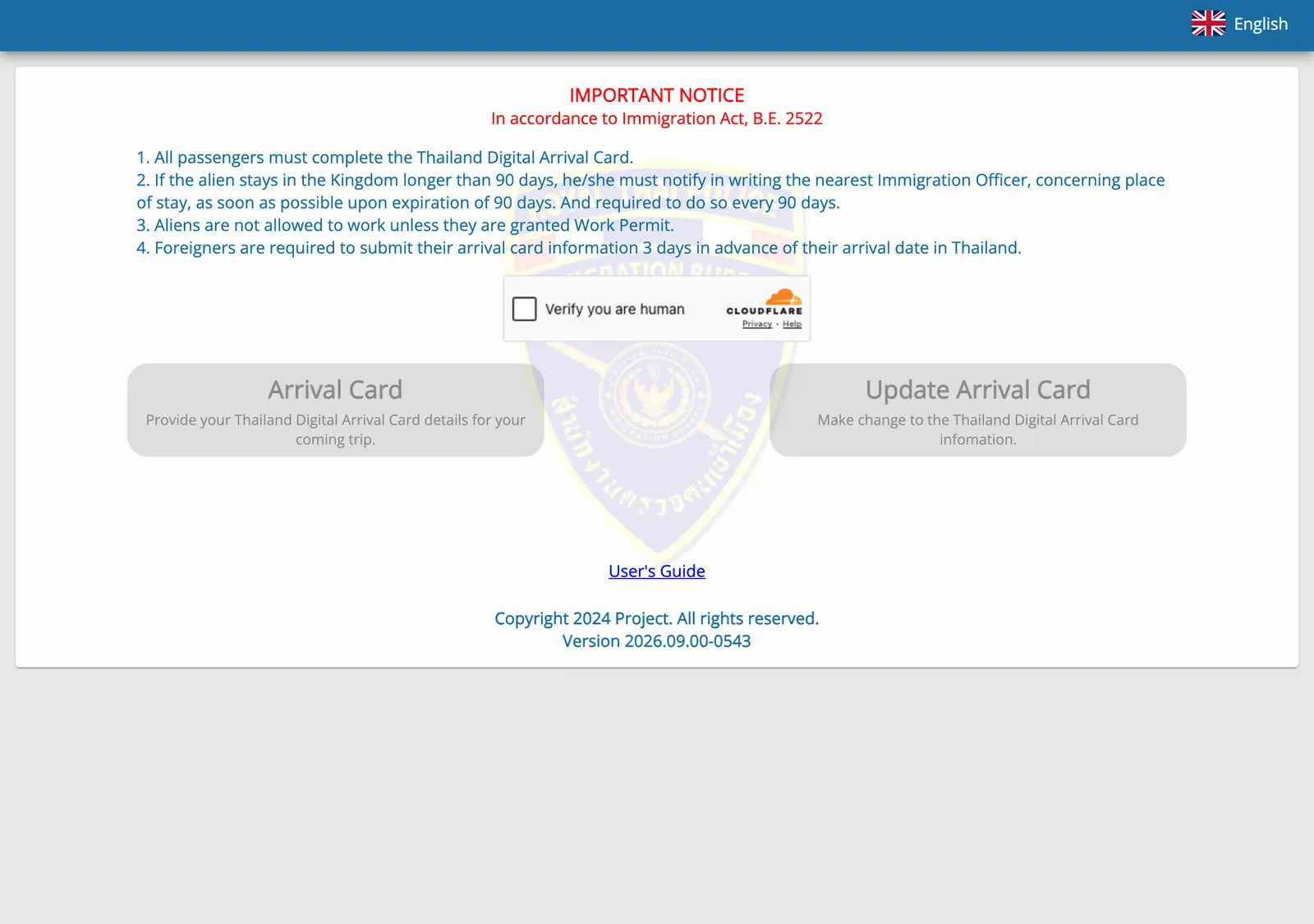
Leave the Thailand Digital Arrival Card for last and submit it 3 days in advance of your arrival date. Completing it online is mandatory for all foreign nationals before arrival, and it can be completed right up until you go through immigration.
The card is free of charge, so be wary of any website charging administrative fees. Each card is valid for a single entry, which means a new one for every entry. Use the TDAC guide as you fill it in.
What waits until you land
Some jobs belong to your first days in Phuket rather than the weeks before: the address notice, the first rental search (rent guide) and the extension guide. For a base during the first month, look at where to stay.
Next in this journey: start with the first-week checklist, move on to where to live, and finish with the cost of living.
Photo credits
- Photos and clips uploaded to Google Maps (Phuket International Airport on Google Maps (opens in a new tab), Phuket Immigration Office on Google Maps (opens in a new tab), British International School, Phuket on Google Maps (opens in a new tab)) by Felix Y, Google Maps contributor.
Step by step
- Pick your visa routeVisa-exempt entry allows up to 30 days for tourism; for longer stays compare the DTV, LTR and Non-O.
- Sort insuranceThe LTR asks for health insurance of at least USD 50,000 or an alternative.
- Apply for the pet permitApply by email at least 7 days and no more than 60 days before departure.
- Contact the schoolBISP accepts applications for entry at any time during the school year.
- Plan moneyKasikornbank charges THB 250 per Visa withdrawal.
- Register your SIMRegister the SIM before you use it in Thailand.
- File the arrival cardSubmit it 3 days in advance of your arrival date.
Not confirmed: Customs rules for shipping household goods to Phuket are not confirmed: ask your shipper and check the Thai Customs Department before you pack. Passport validity beyond one embassy's tourist visa checklist is not confirmed here.
Common questions
Can I arrive in Phuket without a visa?
Visa exemption covers nationals of 60 countries and territories, who are eligible for tourism stays of up to 30 days, effective 15 September 2026. Find your nationality on the list first.
How far ahead do I submit the arrival card?
Submit it 3 days in advance of your arrival date. It costs nothing, and each card is valid for a single entry.
Can I bring my dog or cat?
Your dog or cat needs an import permit, applied for by email at least 7 days and no more than 60 days before departure. Build in 5-7 Thai business days for processing.
Do I need health insurance for a Phuket visa?
LTR applicants need health insurance of at least USD 50,000 or one of the listed alternatives. For the O-A retirement extension, cover must reach at least USD 100,000 or THB 3,000,000.
Can my child join a school mid-year?
Apply whenever it suits you: British International School, Phuket accepts applications for entry at any time during the school year.
What does a foreign card pay at a Thai ATM?
At a Kasikornbank ATM, expect THB 250 per transaction with a Visa card and THB 350 with a MasterCard.
Do I need a Thai tax ID before I arrive?
Short visits are exempt: a foreigner present for one period of up to 14 days and up to 90 days in total in a tax year does not need one. Otherwise, apply within 60 days from the date you derive assessable income.
Must I register a Thai SIM?
Register the SIM before using it in Thailand. As a foreign national, you send your passport number by SMS to 4444161.
Read next
General information checked against the sources listed above, not legal advice for your situation. Rules and office practice change; confirm with the immigration office or a licensed adviser before you act. See how guides are checked.
Spotted an error? Report it.
Comments (0)
Be the first to ask about this topic.