
Thailand Visa Types: Which Route Fits Your Phuket Stay
Thailand has no single visa for Phuket; the route follows your purpose. A listed passport gets up to 30 days visa-free. The DTV suits remote work and activities. Retirees aged 50 or older use Non-O, O-A or O-X. The LTR covers high income or assets. ED and Non-B cover study and work.
On this page
Thailand has no single visa for Phuket. The right one depends on why you are staying, so start with your purpose, then read the guide for that route.
Which route fits you
The table gives the length of stay and one test to meet for each route.
| Route | Length | Key test |
|---|---|---|
| Visa exemption | Up to 30 days | Passport on the Gazette list, tourism only |
| Visa on Arrival | Up to 15 days | Azerbaijan, Belarus or Serbia |
| Tourist visa (TR) | Up to 60 days | Funds of THB 20,000 per person at the Oslo embassy |
| DTV | 180 days per entry | Funds of THB 500,000 |
| LTR | 10 years, renewable | Income or assets in USD |
| Non-O retirement | 90 days | Age 50, then THB 800,000 deposit or THB 65,000 a month |
| O-A | 1 year | Age 50, then THB 800,000 or THB 65,000 a month |
| O-X | Up to 10 years | THB 3 million deposit, or THB 1.8 million plus THB 1.2 million a year income |
| ED | Valid three months | A study purpose |
| Non-B | Valid three months | Ministry of Labour letter |
Rules for short stays changed on 15 September 2026. The visa exemption guide covers the new lists, and the DTV guide covers remote work. The TDAC guide covers the arrival card.
What each route costs
Fees below come from the pages cited. Embassy visa fees differ by post, so read the page of the embassy that will process your application.
| Item | Fee | Other costs and papers |
|---|---|---|
| Extension of stay | THB 1,900 | Applied for at the Immigration Bureau |
| DTV | USD 400 at Washington, GBP 300 at London | Funds of THB 500,000 |
| LTR | THB 50,000 per person | No BOI fee for the endorsement; results within 20 working days |
| Re-entry permit | THB 1,000 single, THB 3,800 multiple | Leaving without one cancels the permitted stay |
| Overstay | THB 500 per day, up to THB 20,000 | Entry-ban rules sit in Order 1/2558 |
Short visits: exemption, Visa on Arrival and tourist visa
A Ministry of Interior announcement lists the countries and territories whose holders enter temporarily for tourism without a visa. They may stay not more than thirty days. It takes effect after fifteen days from its publication.
Visa on Arrival is a separate scheme for three countries, with a stay of up to 15 days for tourism. The visa exemption guide has the lists and the border conditions.
The tourist visa (TR)
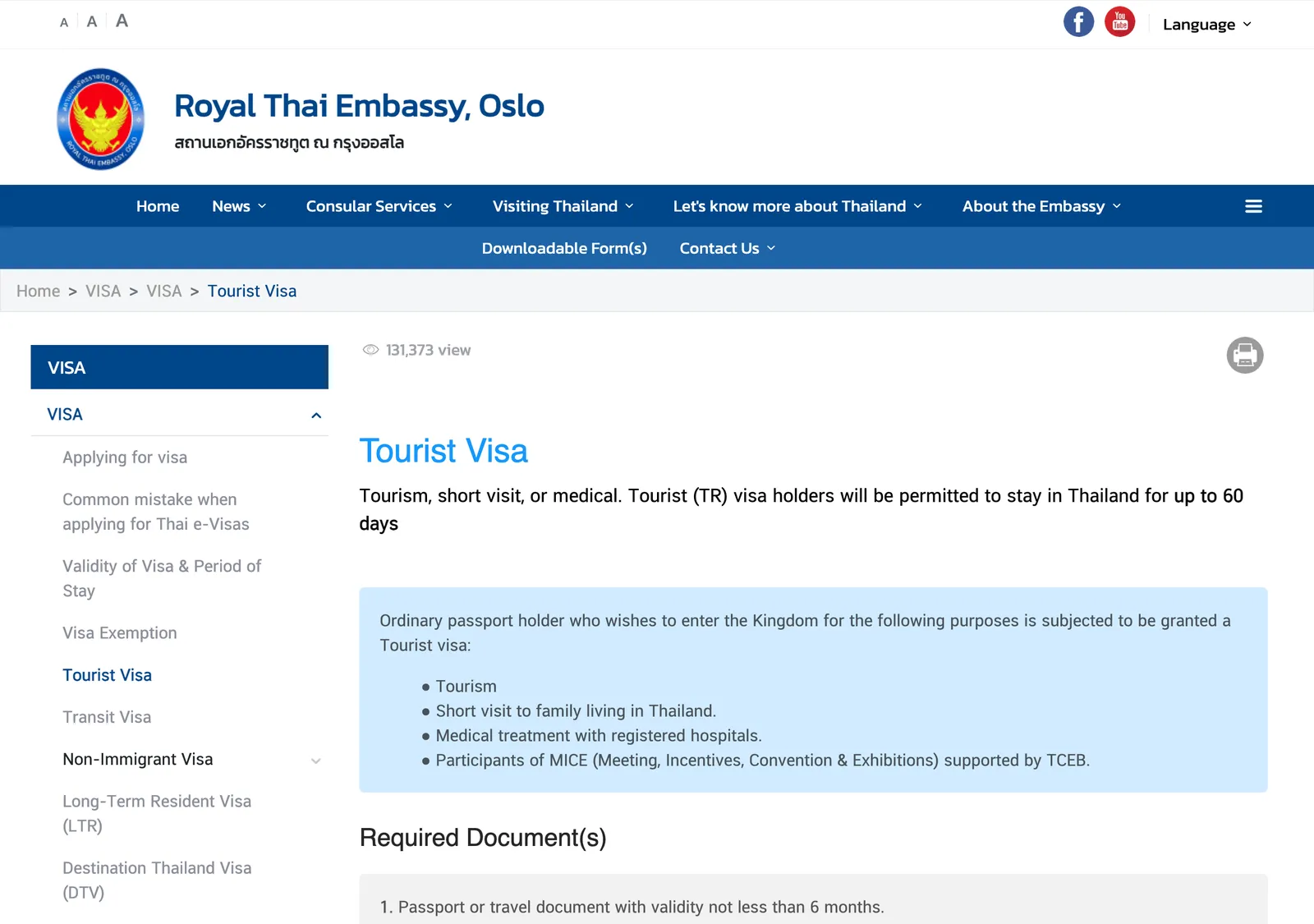
The TR visa is for tourism, short visits or medical purposes, and holders may be permitted to stay up to 60 days. The Oslo embassy lists adequate finance as THB 20,000 per person or THB 40,000 per family. The visa is valid for 90 days or 180 days.
That embassy asks for a passport valid for not less than 6 months, a travel booking with flight details and proof of accommodation. Other posts publish their own lists.
Extending a short stay
A visa-exempt visitor can request an extension of stay of up to 30 days. The extension is at the immigration officer’s discretion, and you apply before the permitted stay ends. The fee is THB 1,900. A tourist visa holder also applies at the Immigration Bureau, and the extension is solely at the officer’s discretion.
Planning three months in Phuket
Visa exemption plus one extension tops out at 30 + 30, which is up to 60 days. That falls short of three months. The tourist visa starts at up to 60 days, and a longer stay needs an extension that the officer may refuse. Extensions are never guaranteed.
A DTV allows 180 days per entry. It needs THB 500,000 in funds and proof of permanent residence at the embassy where you apply. Choose the route before you book the flight, because a tourist extension costs THB 1,900.
Remote work and activities: the DTV
The Destination Thailand Visa (DTV) is issued to people who travel and work remotely in Thailand, for example foreign talent, freelancers and digital nomads. It also covers activities such as Muay Thai courses, cooking classes, sport trainings, medical treatment, seminars and music festivals. A spouse and children under 20 can get a DTV as accompanying family.
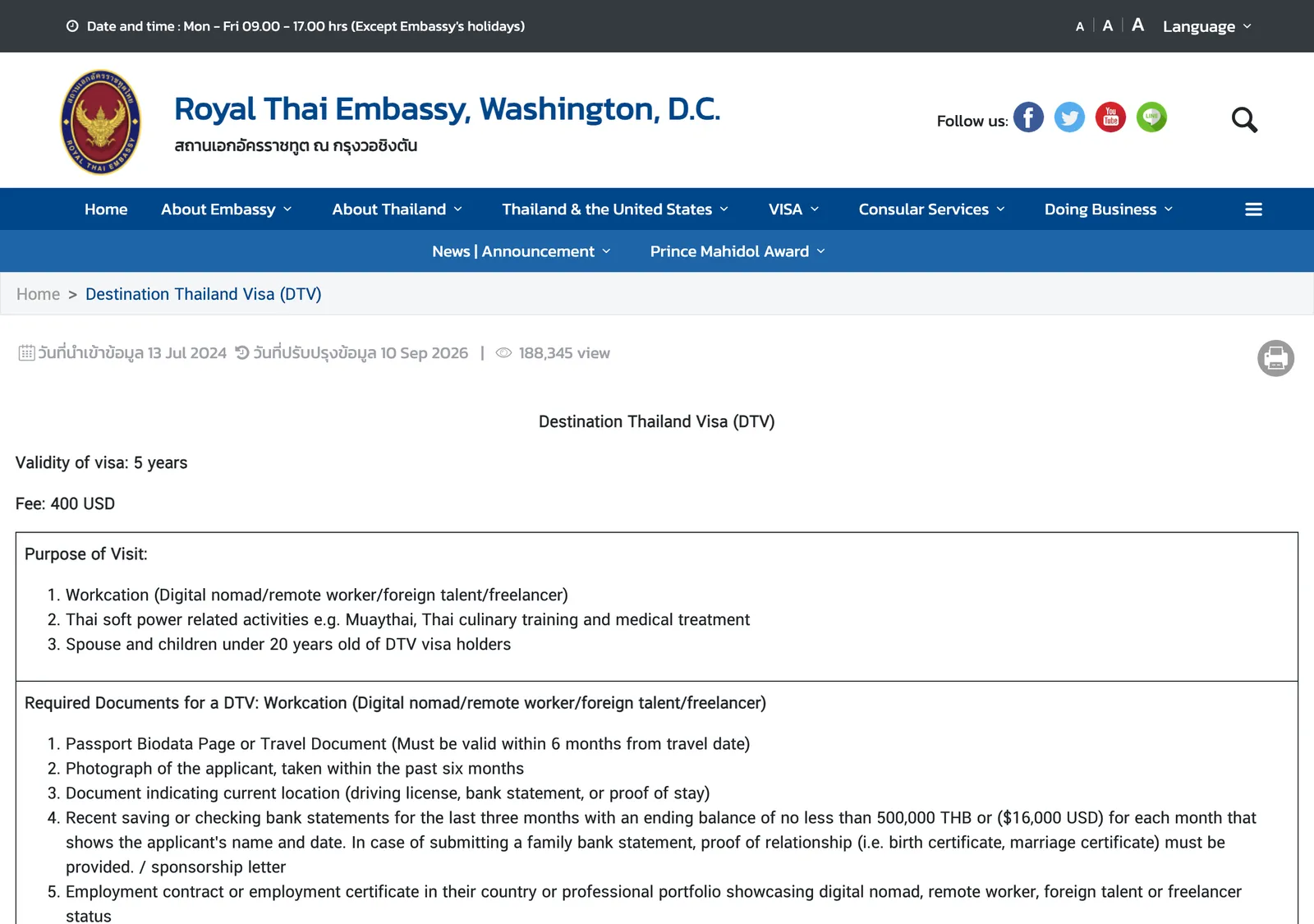
The Thai e-Visa platform, thaievisa.go.th, takes DTV applications online. Financial evidence is at least THB 500,000. One embassy asks for bank statements for the last three months with an ending balance of at least THB 500,000 for each month.
New document rules from 31 August 2026
From 31 August 2026, DTV applicants submit proof of permanent residence instead of a document indicating their current location. A certificate of criminal record clearance is added. The revised rules apply to applications submitted from 00.00 hrs. on 31 August 2026, Thailand local time. Read the page of your embassy before you gather papers.
How long the DTV lasts
- The visa is valid for 5 years.
- The holder may stay a maximum of 180 days per entry.
- One extension of stay of 180 days may be applied for at the Immigration Bureau.
- After 180 days plus 180 days, the holder must leave and may re-enter with the same DTV within its validity.
The DTV guide goes through the steps for Phuket.
Long-term residents: the LTR visa
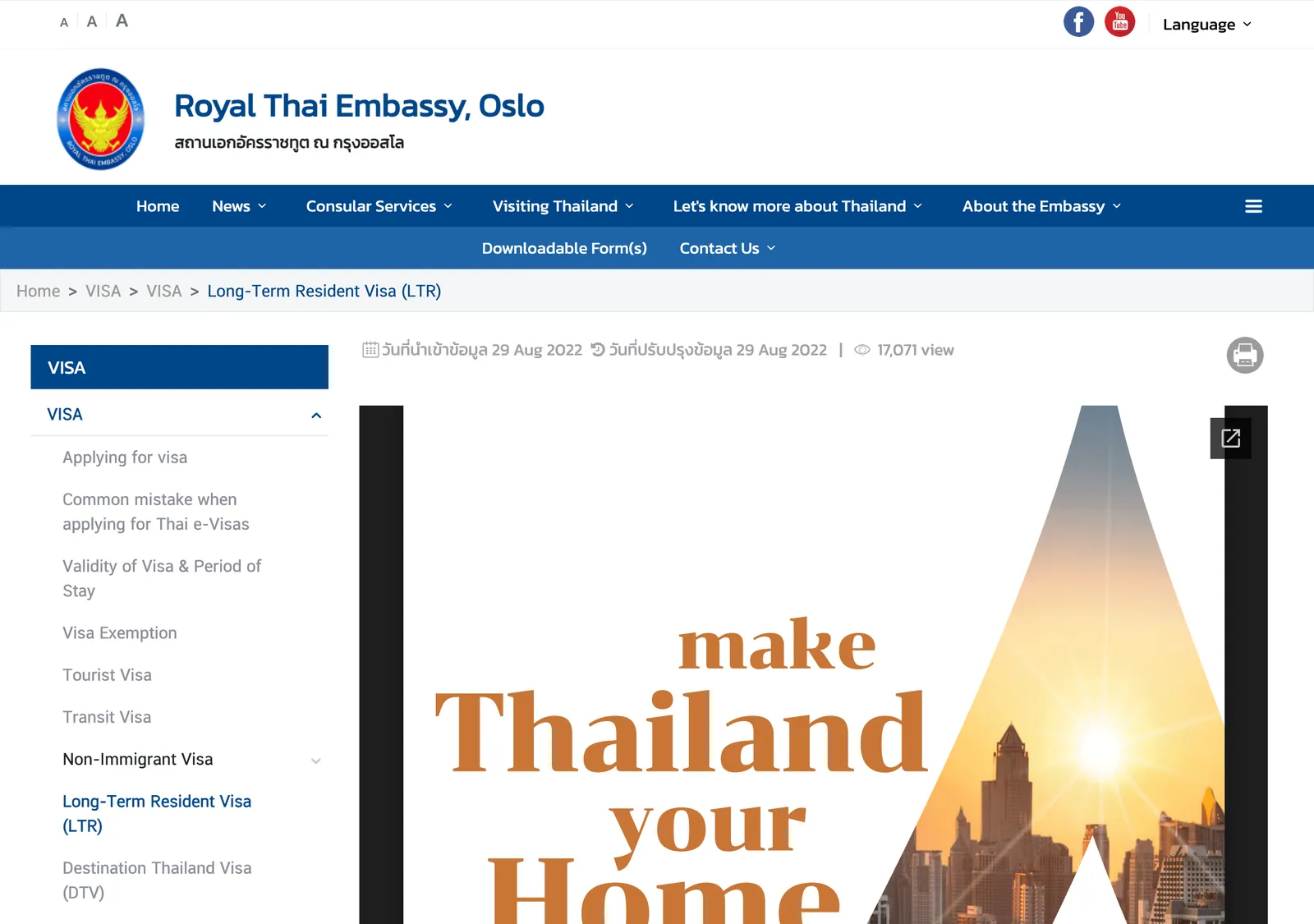
There are four types of LTR visa: Wealthy Global Citizen, Wealthy Pensioners, Work-from-Thailand Professionals and Highly-skilled Professionals. It is a renewable visa: 5 years first, extended by 5 more years if the qualifications are still met. Holders report once a year instead of every 90 days, and are exempt from re-entry permits.
Who each category suits
- Wealthy Pensioners are retirees aged 50 and older with an annual pension or stable passive income, of at least USD 80,000 a year at the time of application.
- Work-from-Thailand Professionals need an average personal income of at least USD 80,000 a year over the past two years.
- Wealthy Global Citizens must hold at least USD 1 million in assets.
All four categories need health insurance of at least USD 50,000, or social security benefits in Thailand, or a deposit of at least USD 100,000 in a bank account. Work permits are not granted to Work-from-Thailand Professionals. The processing fee is THB 50,000 per person when collected in Thailand.
An LTR visa currently covers your legal spouse and children under 20, up to 4 dependants per holder. Thailand has approved extending this to parents with no cap on numbers, but the extension is not in force yet. Check ltr.boi.go.th before planning to bring a parent.
Retirement visas: Non-O, O-A and O-X
Three visas carry the retirement label. They differ in length and in how much money you show.
Non-Immigrant O (retirement)
Applicants must be at least 50 years of age. The holder may stay in Thailand for 90 days. Under 50, none of the three retirement visas is open to you, so look at the DTV, LTR, ED or Non-B routes.
One embassy accepts a bank statement showing at least THB 800,000. It also accepts an income certificate showing monthly income of at least THB 65,000.
Non-Immigrant O-A
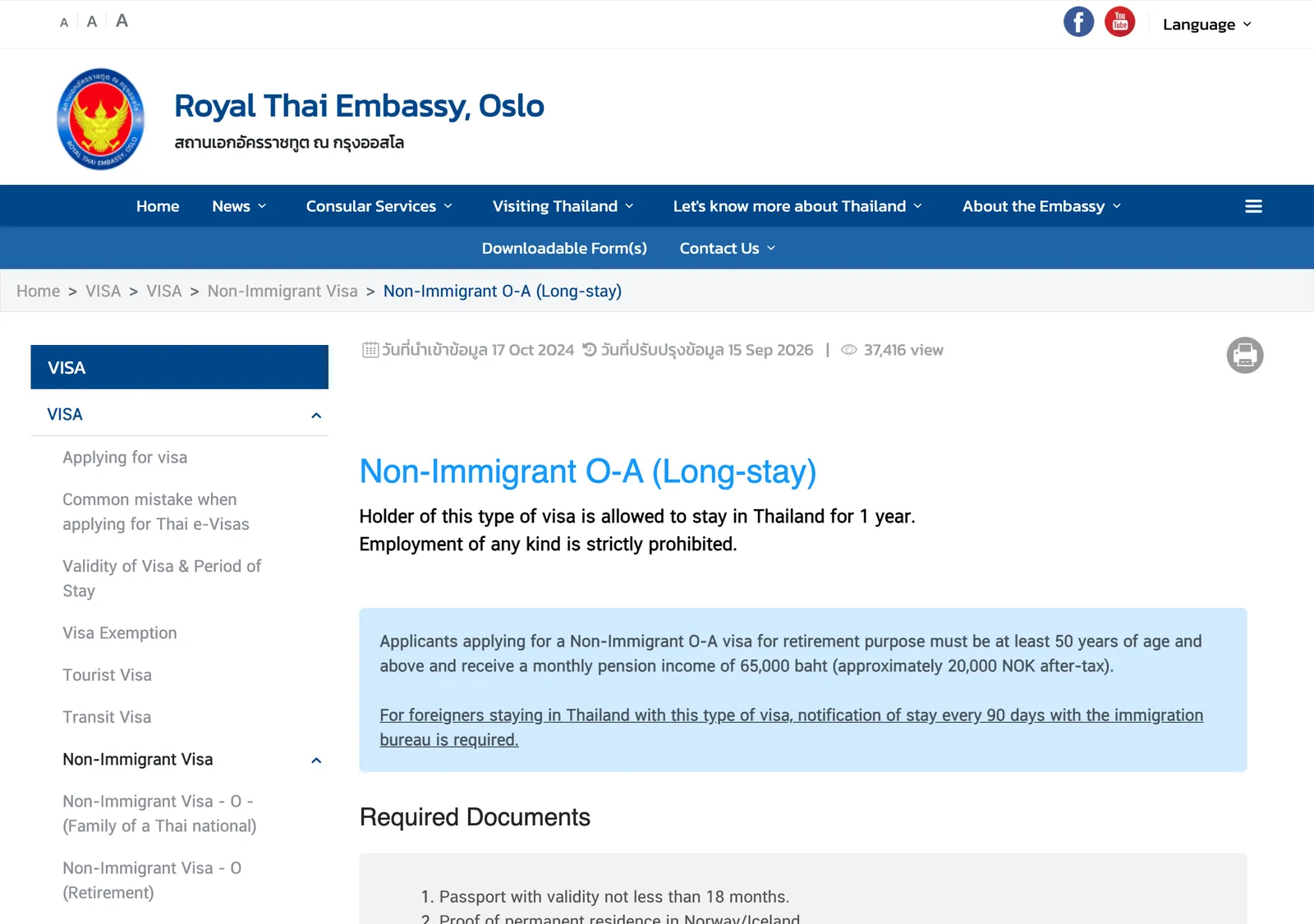
The holder may stay in Thailand for 1 year. The applicant must be at least 50 years of age and show a bank statement with at least THB 800,000. An income certificate with a monthly after-tax salary of at least THB 65,000 is accepted instead. A deposit account plus monthly income totalling at least THB 800,000 a year is also accepted.
Non-Immigrant O-X
An O-X holder can stay in Thailand up to 10 years with multiple entries. That is 5 years from first entry, extendable for a further 5 years. Applicants must be at least 50 and be nationals of a listed country, among them Australia, Germany, Japan, Canada and the USA.
There are two funds options. One is THB 3 million deposited in a Thai bank. The other is THB 1.8 million in a Thai bank plus income of THB 1.2 million a year.
Retirement extension at Phuket Immigration
A retirement extension of stay needs an applicant at least 50 years old. The income route needs evidence of income of at least THB 65,000 a month. The deposit route needs at least THB 800,000 in a Thai bank, in the account at least 2 months before filing and at least 3 months after permission is granted.
Permission is granted for no more than 1 year at a time. A one-year extension may be granted at the immigration officer’s discretion if the requirements are met.
Study, work and family
Three routes cover study, employment and a Thai family. Each has its own paperwork.
Study: the ED visa
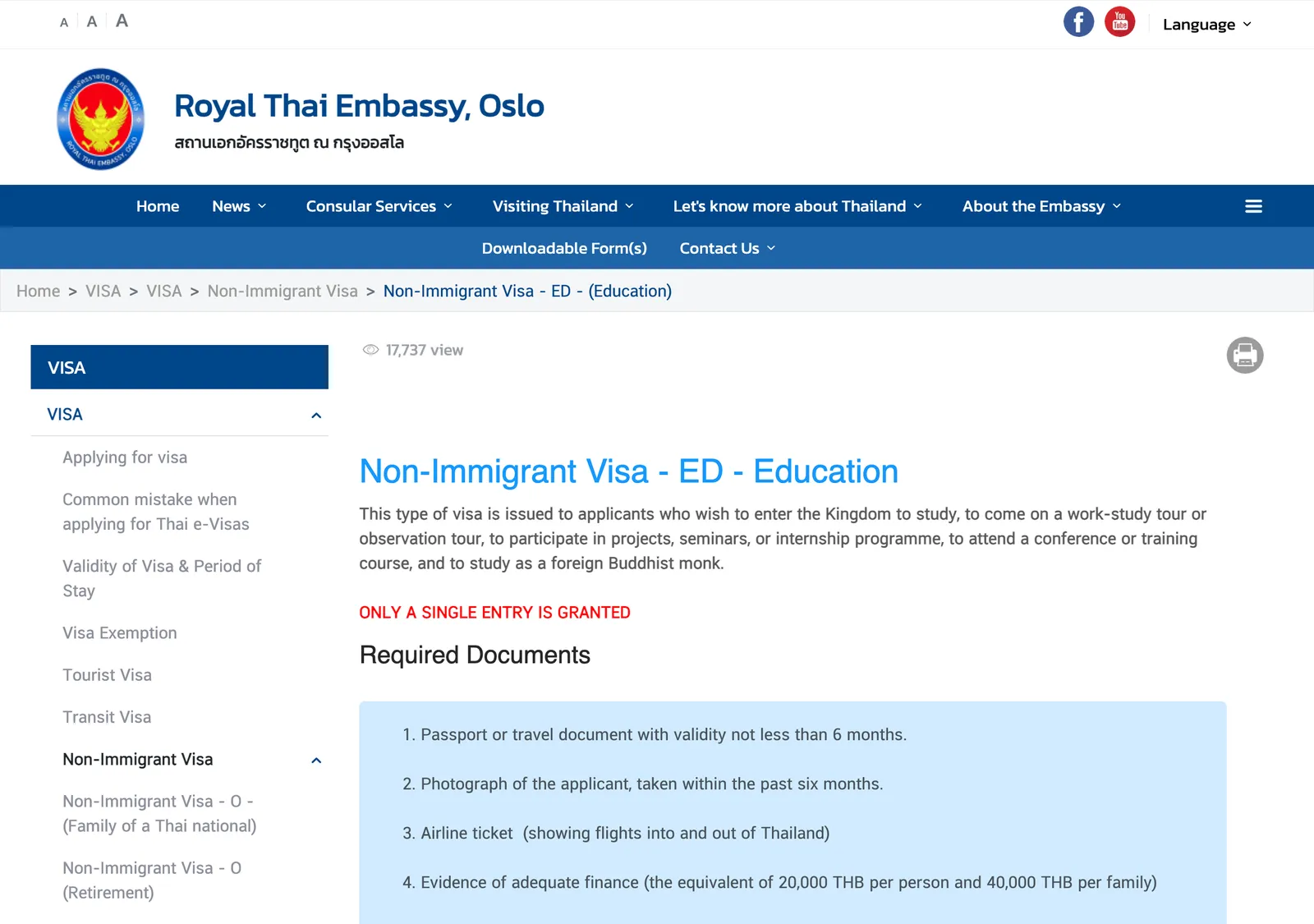
The Non-Immigrant ED visa is for study, work-study or observation tours, seminars, internships, conferences, training courses and foreign Buddhist monks. Only a single entry is granted. A single-entry visa is valid for three months. An extension of stay is at the immigration officer’s discretion and is filed at the Immigration Bureau.
Work: the Non-B visa and the work permit
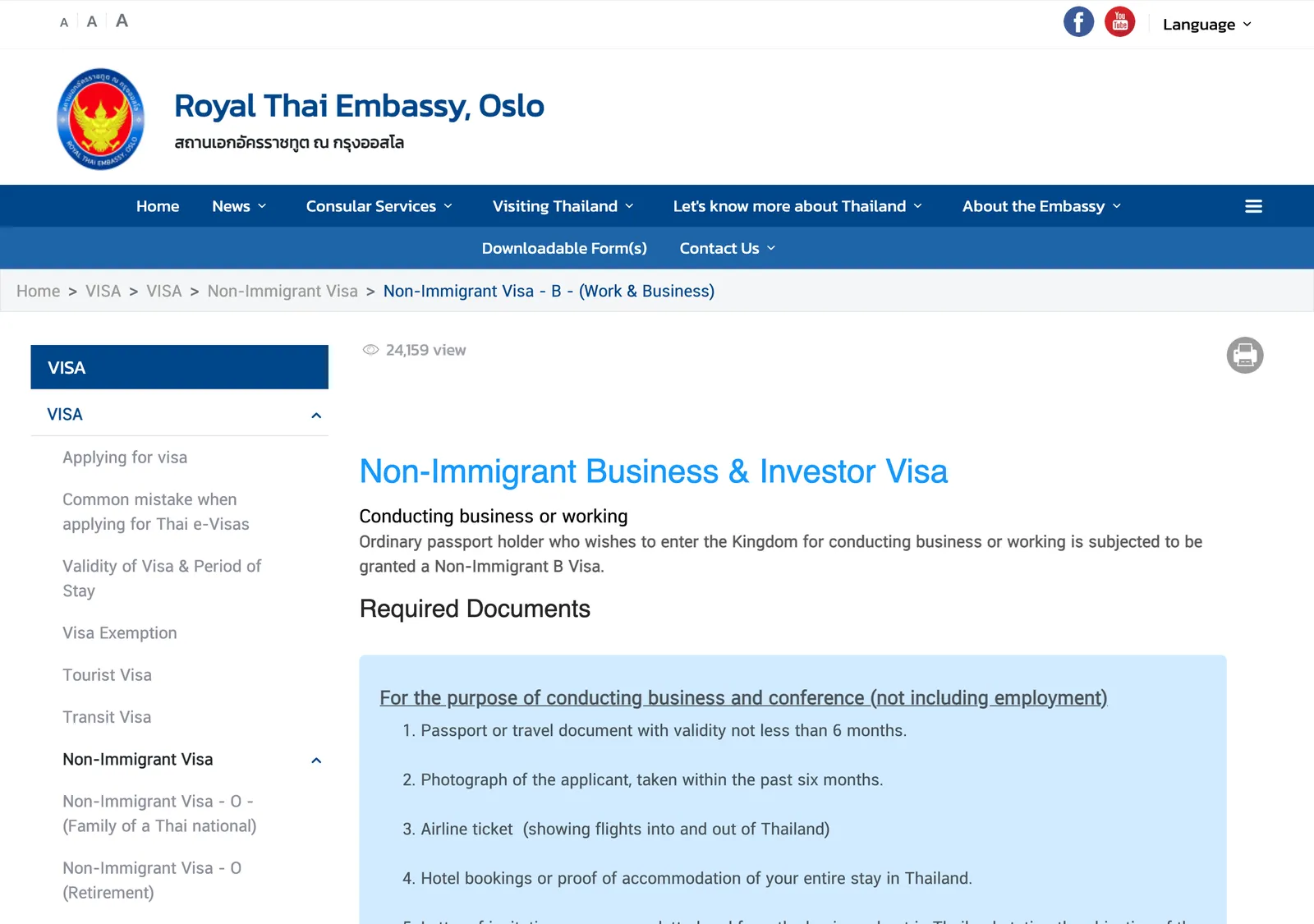
For Non-B employment the Oslo embassy asks for a letter of approval from the Ministry of Labour. The Thai employer applies for it by submitting Form WP3 at the Department of Employment or a Provincial Employment Office. A single-entry Non-B visa is valid for three months.
The Department of Employment’s e-WorkPermit system lists applying for a new work permit for a Non-Immigrant under Section 59, form Bor Tor 25.
Marriage and family of a Thai national
The Immigration Bureau’s extension criteria for family ties follow money tests. In a marriage to a Thai wife, the foreign husband needs an average income of at least THB 40,000 per month. The alternative is at least THB 400,000 in a bank account in Thailand for the past two months.
For parents of a Thai national the same THB 40,000 per month income or THB 400,000 deposit applies. For a spouse, the marriage must be valid in law and in fact.
Rules that apply on every visa
These rules sit on top of whichever visa you hold. LTR holders report once a year instead of every 90 days and are exempt from re-entry permits.
| Rule | What it says |
|---|---|
| Arrival card | Non-Thai nationals complete the TDAC online within 3 days before arrival. It is filed for every entry. |
| Address notice | Notify an immigration officer of your address every 90 days. Reports may be made from 15 days before until 7 days after the due date. |
| Late notice | Report in person and pay a fine of THB 2,000. |
| Residence notice | The house-master, owner or hotel manager notifies immigration within twenty-four hours. |
| Overstay | THB 500 per day, up to THB 20,000. |
| Re-entry | THB 1,000 single, THB 3,800 multiple. |
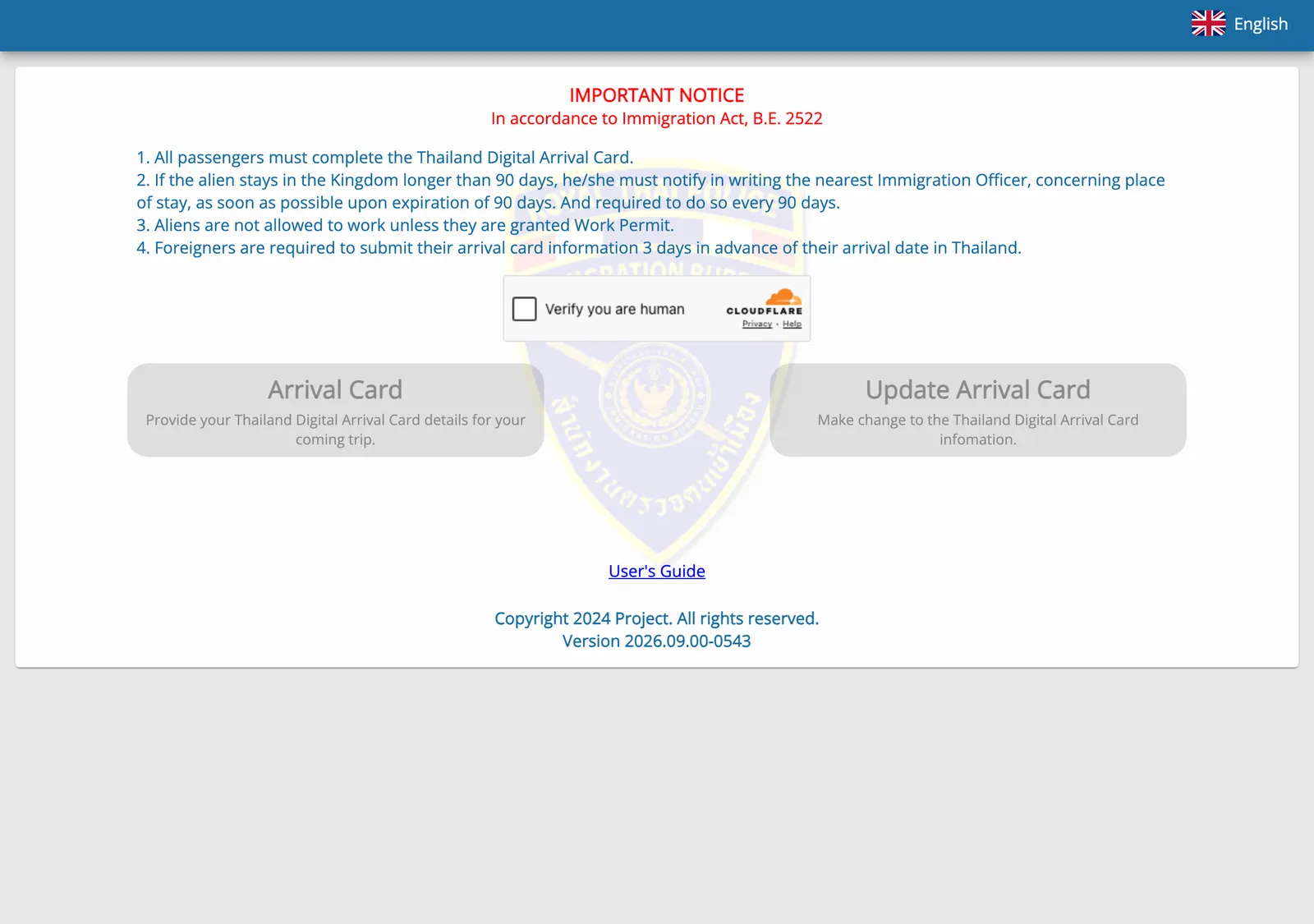
TM.30 can be filed in person, by registered post, or online after registering for a username and password. Leaving Thailand without a re-entry permit cancels the permitted stay. The re-entry bans after an overstay come from Ministry of Interior Order 1/2558.
If you overstay 90 days or less and pay the fine at the airport, you are not banned from coming back. If you overstay more than 90 days and leave on your own, you are banned for 1 year. More than 1 year brings 3 years, more than 3 years brings 5 years, and more than 5 years brings 10 years.
If you are arrested while overstaying, the ban is 5 years for an overstay up to 1 year. Anything longer brings 10 years. The overstay fines guide covers the fine and the ban rules.
Phuket Immigration offices
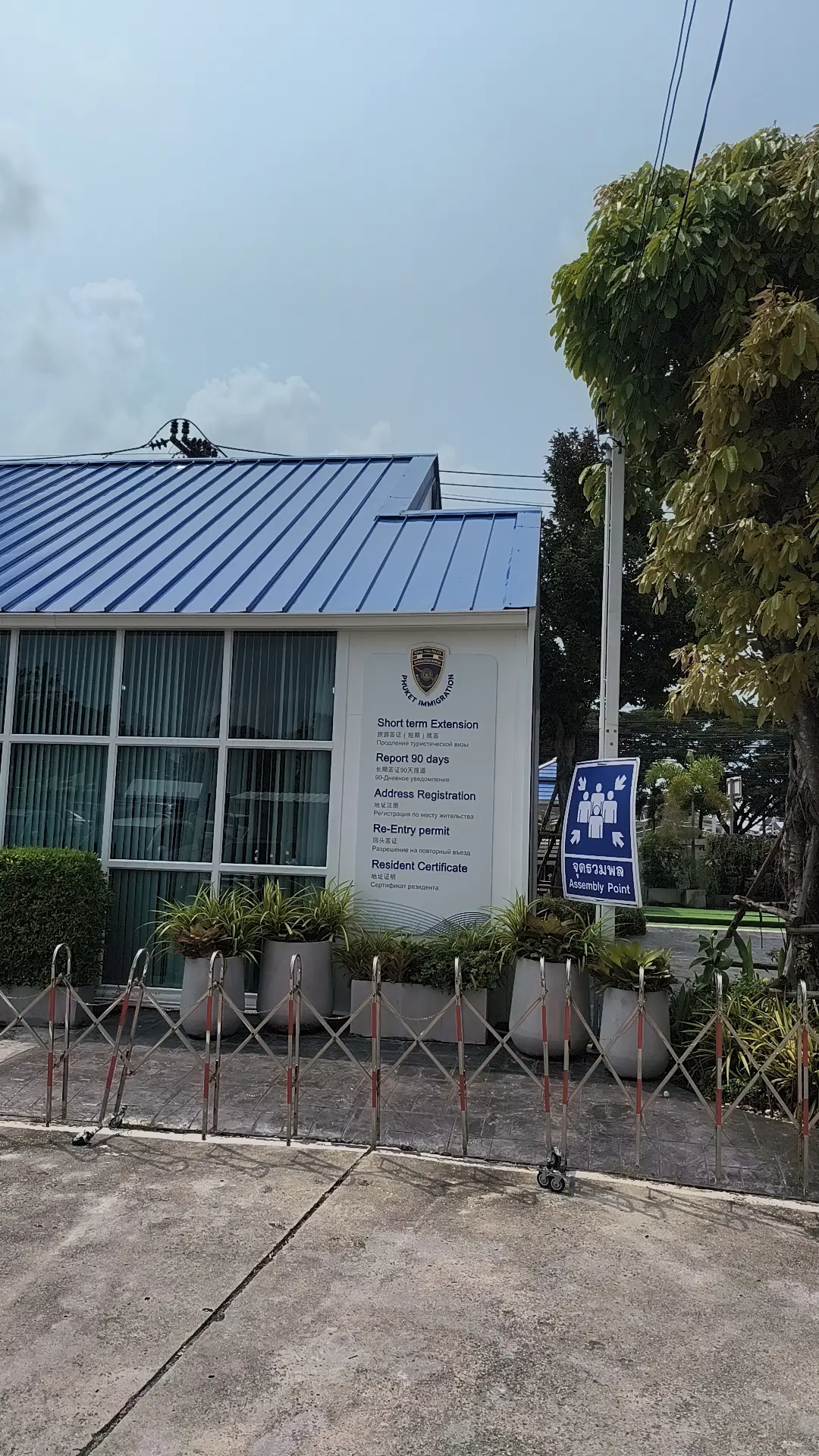
Phuket Immigration Office is at 482 Phuket Rd., Talad Yai, Mueang, Phuket 83000. The telephone is 0 7622 1905, and the hotline is 1178. The office covers Phuket province for extensions.
482 Phuket Rd, Tambon Talat Yai, Mueang Phuket District, Phuket 83000, Thailand · Open in Google Maps (opens in a new tab)
Hours and closures
The morning session runs 8.30 to 12.00, and the afternoon session runs 1.00 to 4.30, Monday to Friday. The office is closed Saturday and Sunday and on national public holidays. The homepage lists closures, for example 23 October 2026.
Patong and Blue Tree service points
The Patong point is at Patong Beach, Kathu, Phuket 83150, telephone 0 7634 0477. It is open Monday to Friday, 10.00 to 12.00 and 1.00 to 3.00.
The Blue Tree point is at 4, 2 Srisoonthorn Rd., Tumbon Srisoonthorn, Thalang, Phuket. It keeps the same hours: Monday to Friday, 10.00 to 12.00 and 1.00 to 3.00. Call the main office to confirm which service a point handles.
Online services
The homepage E-Service menu lists Queue Online for booking, a 90 Days Report online item and a resident accommodation notification system. A separate Queue Online item is for business. The menu also has a Check Visa Application Status item for extension applications.
Its public services include the residence report for foreigners staying over 90 days, the notification by house owners and hotel managers and the re-entry permit.
Photo credits
- Photos and clips uploaded to Google Maps (Phuket Immigration Office on Google Maps (opens in a new tab)) by Michel Kluska.
Not confirmed: Documents and fees at your embassy; DTV rules changed on 31 August 2026, so read its page first.
Common questions
Which visa suits a digital nomad in Phuket?
The Destination Thailand Visa is issued to people who travel and work remotely, such as freelancers and digital nomads. The holder may stay a maximum of 180 days per entry.
Which visa suits a retiree?
Applicants for the Non-Immigrant O retirement visa must be at least 50 years of age. The O-A and O-X visas also need an applicant aged at least 50.
How long can I stay without any visa?
Holders of passports on the Gazette list may stay not more than thirty days for tourism. Visa on Arrival allows a stay of up to 15 days.
Can an LTR holder get a work permit as a remote worker?
Work permits are not granted to Work-from-Thailand Professionals, who work remotely for a foreign employer.
What does the DTV cost?
The fee is USD 400 at the Washington embassy and GBP 300 at the London embassy. Financial evidence of at least THB 500,000 is asked for.
What is the address report for long stays?
A foreigner permitted to stay temporarily must notify an immigration officer of their address every 90 days. LTR holders report once a year instead.
Do I need a TDAC whatever my visa?
All non-Thai nationals entering by air, land or sea complete the TDAC online within 3 days before arrival. It is filed for every entry.
Where is the immigration office in Phuket?
Phuket Immigration Office is at 482 Phuket Rd., Talad Yai, Mueang, Phuket 83000. The telephone is 0 7622 1905.
Read next
General information checked against the sources listed above, not legal advice for your situation. Rules and office practice change; confirm with the immigration office or a licensed adviser before you act. See how guides are checked.
Spotted an error? Report it.
Comments (6)
Content-City-6240
Your "wife" isnt your wife yet, your best course of action is to register your marriage at amphur / district office. All the fluff isnt required until you get it sorted out.
nlav26
I’m confused how you are planning to live in Thailand forever without a legal marriage. What you have done is worthless in the eyes of the Thai government. You need to get married legally and paperwork from the Amphur office if you intend to stay here on a Non-O visa via your spouse. It’s possible she could get a tourist visa. No one knows. You didn’t tell us much about her. Her finances, current job, property ownership, kids, etc all factor in. White collar workers who own property are far more likely to be approved than a random uneducated, blue collar worker who owns nothing significant, for example. Her going to Japan is worth nothing because a visa isn’t required. The Schengen visa does benefit her. If you think she has a chance based on the above, I would apply for a tourist visa first as it’s much faster and much cheaper. The current processing times for a CR1 or K1 visa are around or upwards of 1.5 years currently. Also, if you do get legally married in Thailand, you will no longer be eligible for a K1, only a CR1.
afox1984
Best/cheapest/easiest way to get a long term visa for Thailand? I might teach English there but if I wanted to work online from Thailand instead, what would be a good way to secure a long term visa? Thanks
MadValley
Do a search on the sub. There are all sorts of options and, unless you meet u/CynicalGamer81's criteria, none of them are very good. There are no good long-term visa options for online workers. (There's a hack if you're from the US, though. US citizens are allowed to start businesses under the same rule as Thais. You could conceivably start your sole proprietorship (LLC?) and give yourself your own B-visa and work permit. Talk to a lawyer.)
bcycle240
Elite is best. It is pretty cheap. 600k for first 5 years and then another 400k for the next 15. The only downside is if you don't have any money you can't use an agent to fake the money like with a marriage or retirement visa. But if you actually want to live here and you do the math it is about the same price as the other options but with more perks (immigration fast lane, free taxi from airport, airport lounges, etc) All those LTR or digital nomad visas or whatever cost millions of baht. Elite is much cheaper than any of those
atlasfalcon
Which visa option should we choose? I'll give you guys a quick breakdown. My girlfriend and I are flying into Bangkok, where we will spend a week before going to Cambodia then Vietnam for around 36 days. We then return to Thailand, via a flight from Hanoi to Chiang Mai. We then intend to stay in Thailand for 54 days before flying from Phuket to Bali. Initally we were intending do get a multiple entry tourist visa. (option1) Would it be easier to get a visa on arrival when we arrive into Bangkok the first time and Chiang Mai the second. On the second arrival extending our visas for an extra 30 days. (option2) What do you folks think? Which road should we go down? The second option certainly seems easier, as I have tried to apply for the multiple entry visa and the number of documents it asks for is a litte overwhelming and confusing, I don't understand what half of them mean. If you guys could help me out with any information, it'd be massively appreciated.