
Phuket Rainy Season: Month-by-Month Rain and Sea Guide
Phuket's rainy season runs from around mid-May to mid-October. September is the wettest month at 350.4 mm over 21.7 rainy days, and the year totals 2271.5 mm over 174.9 rainy days. Swimming at Nai Harn is not recommended from May to October.
On this page
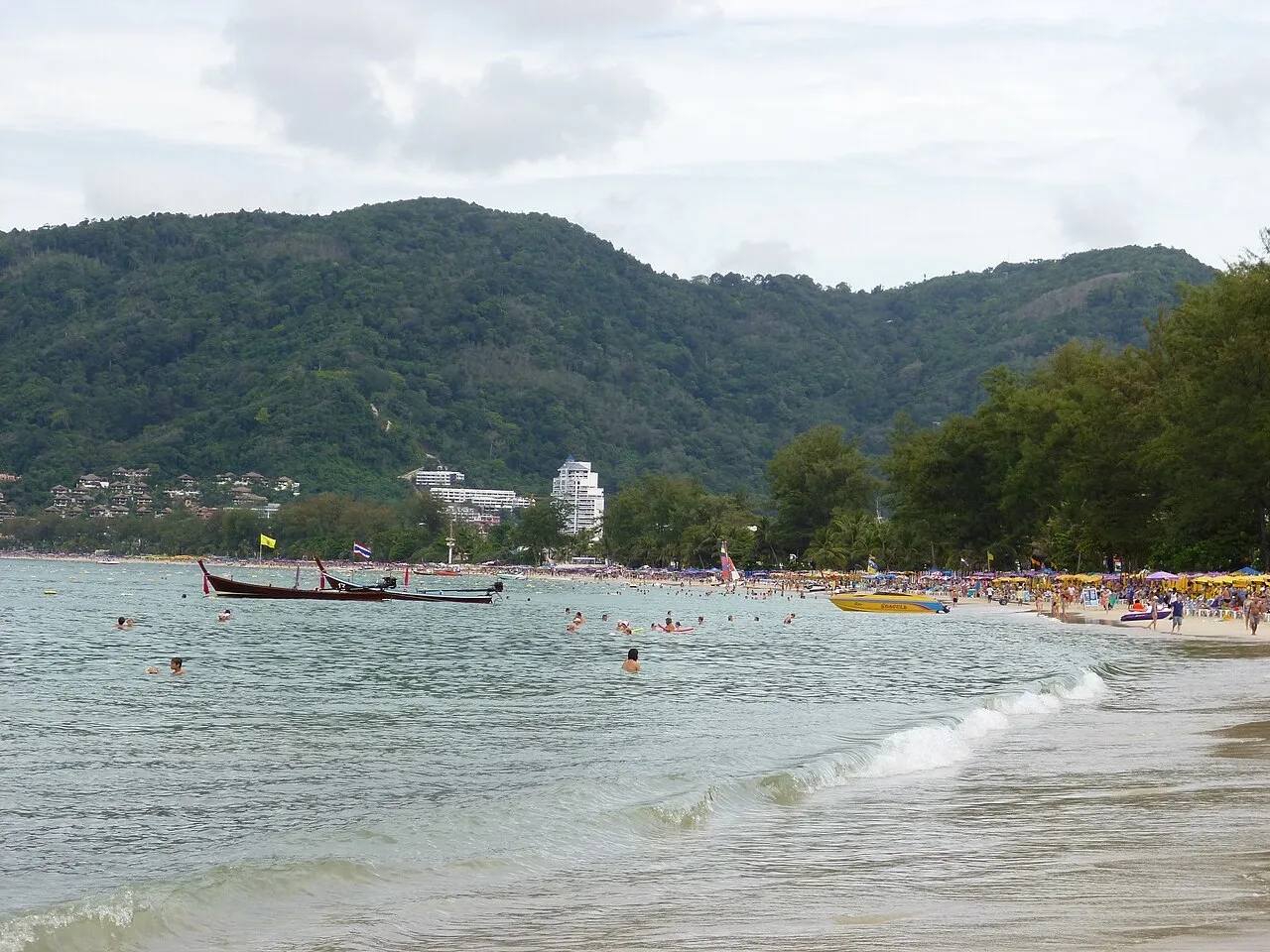
The rainy season in Phuket runs from around mid-May to mid-October, when the southwest monsoon covers the island. September is the wettest month, with 350.4 mm of rain on 21.7 days. February and January are the driest, at 24.0 mm and 49.9 mm.
Rain by month
These are Phuket’s average monthly rainfall figures for 1991-2020 from the Thai Meteorological Department.
| Month | Average rain (mm) | Rainy days |
|---|---|---|
| January | 49.9 | 5.6 |
| February | 24.0 | 3.4 |
| March | 80.7 | 7.5 |
| April | 135.1 | 11.7 |
| May | 236.9 | 18.9 |
| June | 249.4 | 18.6 |
| July | 240.2 | 19.1 |
| August | 308.7 | 19.5 |
| September | 350.4 | 21.7 |
| October | 336.0 | 22.7 |
| November | 178.2 | 15.9 |
| December | 82.0 | 10.3 |
The year totals 2271.5 mm, spread over 174.9 rainy days. Rain arrives in May, when the monthly figure jumps from 135.1 mm in April to 236.9 mm.
The two seasons
The rainy season starts around mid-May and runs to mid-October. In a normal year the daily rain record puts the start at 28 April and the end at 17 November. The earliest end on record is 7 October, the latest 30 December.
Then the northeast monsoon takes over and Phuket gets little rain. November still has 178.2 mm, then December drops to 82.0 mm.
Temperature barely moves: monthly averages run between 27.6 and 29.6 C all year. What changes is the cloud: mean cloudiness on a 0-10 scale is 4.0 in February and 7.4 in September.
Sea and beaches in the monsoon
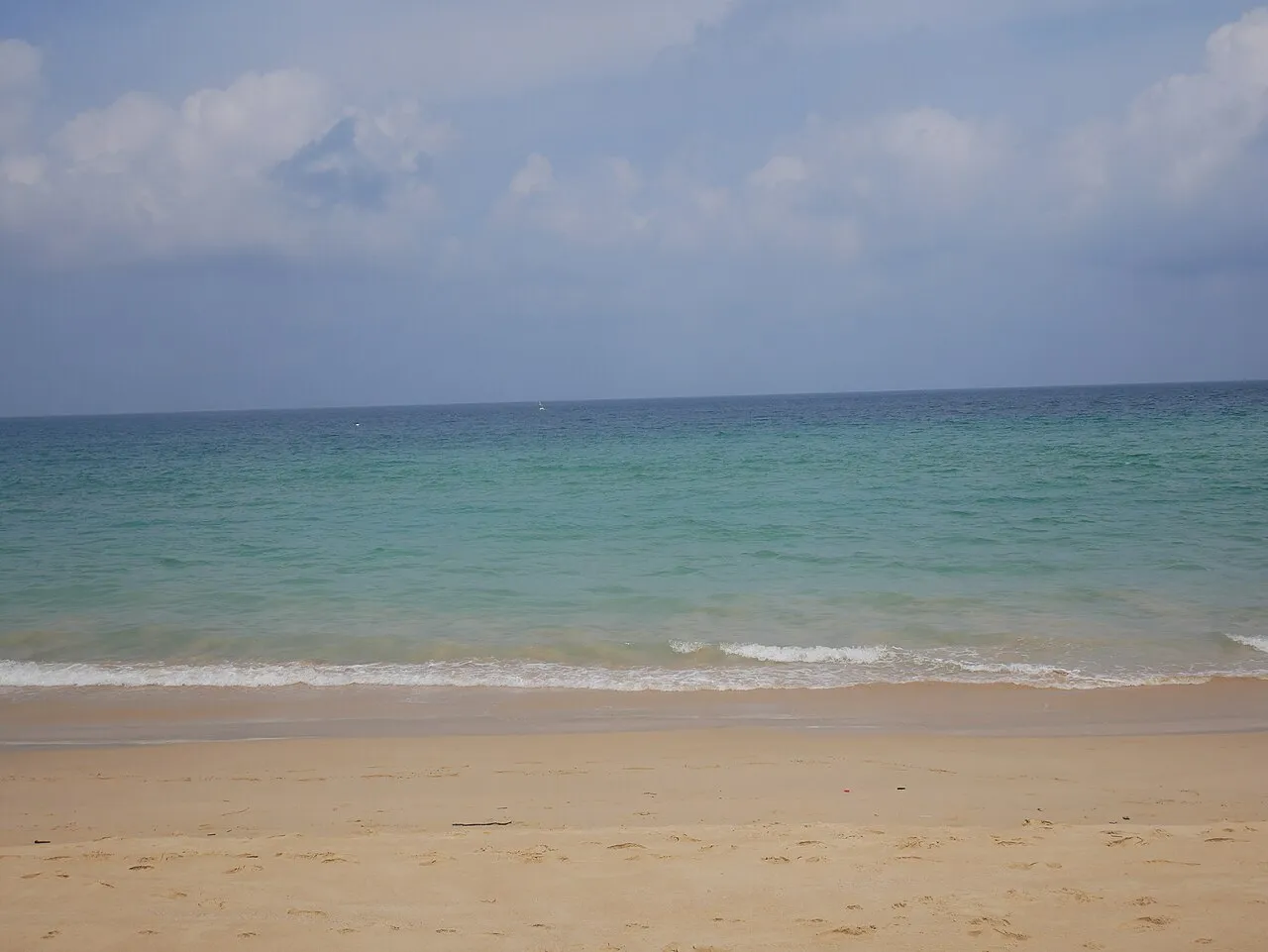
The west-coast beaches take the monsoon directly. Swimming at Nai Harn is not recommended from May to October because of strong current. Surin Beach is not suitable for swimming in the monsoon season.
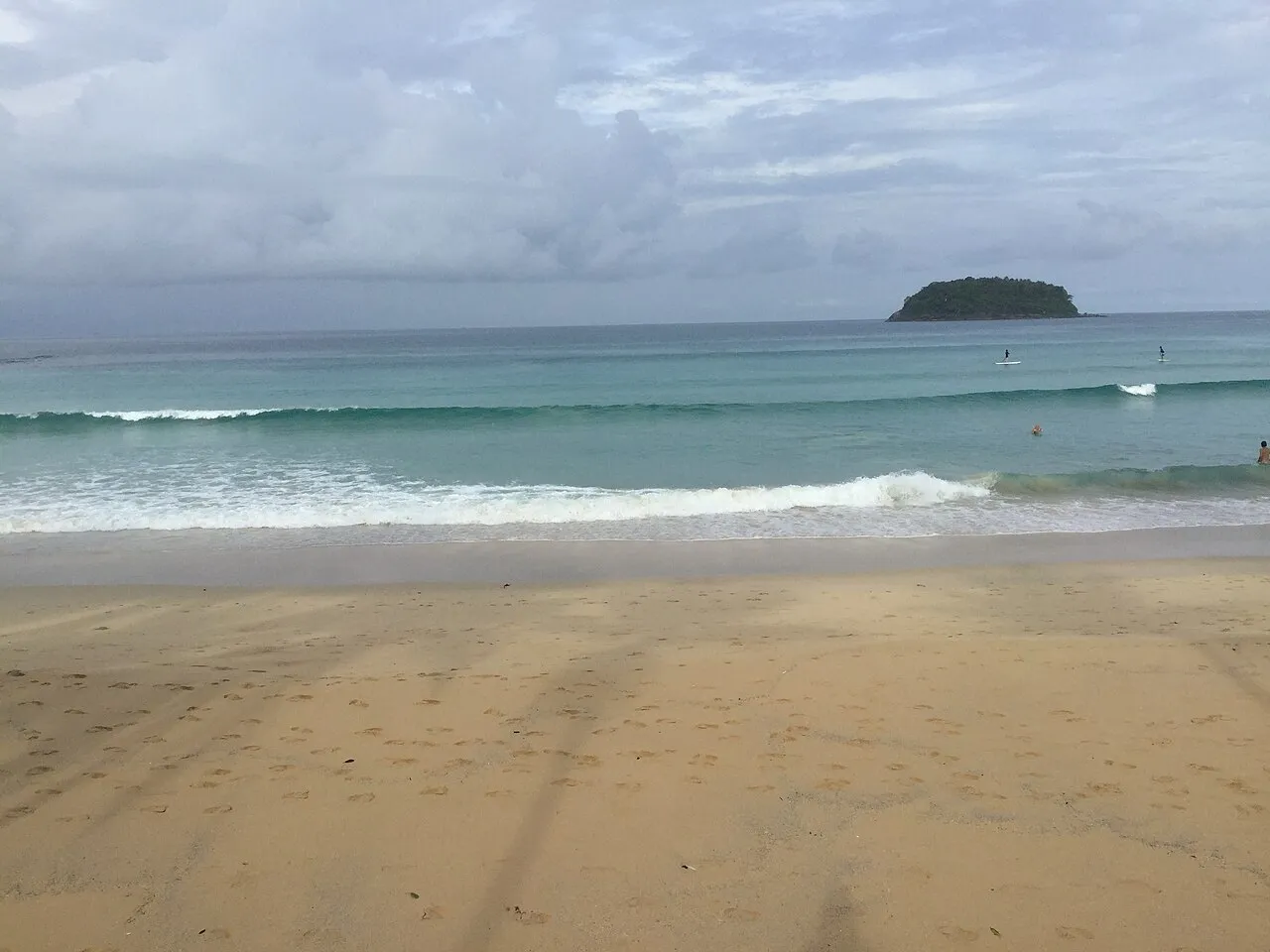
Karon has a rainy season from April to November, and its beach has fairly strong waves and winds. Kata Beach is suited to swimming and used for dive training because of its coral reef. Look at the flag before you go in:
| Flag | Meaning |
|---|---|
| Red | Do not swim |
| Yellow | Swimming allowed, medium risk |
| Green | Calm conditions |
| Red-yellow | Lifeguards on duty |
Large waves and rip currents make swimming very dangerous in the southwest monsoon. Do not swim after heavy rain, at night or outside the buoyed safety zones, and box jellyfish are seen more often in the monsoon months. Compare them all in Phuket beaches compared.
Boat trips and park closures
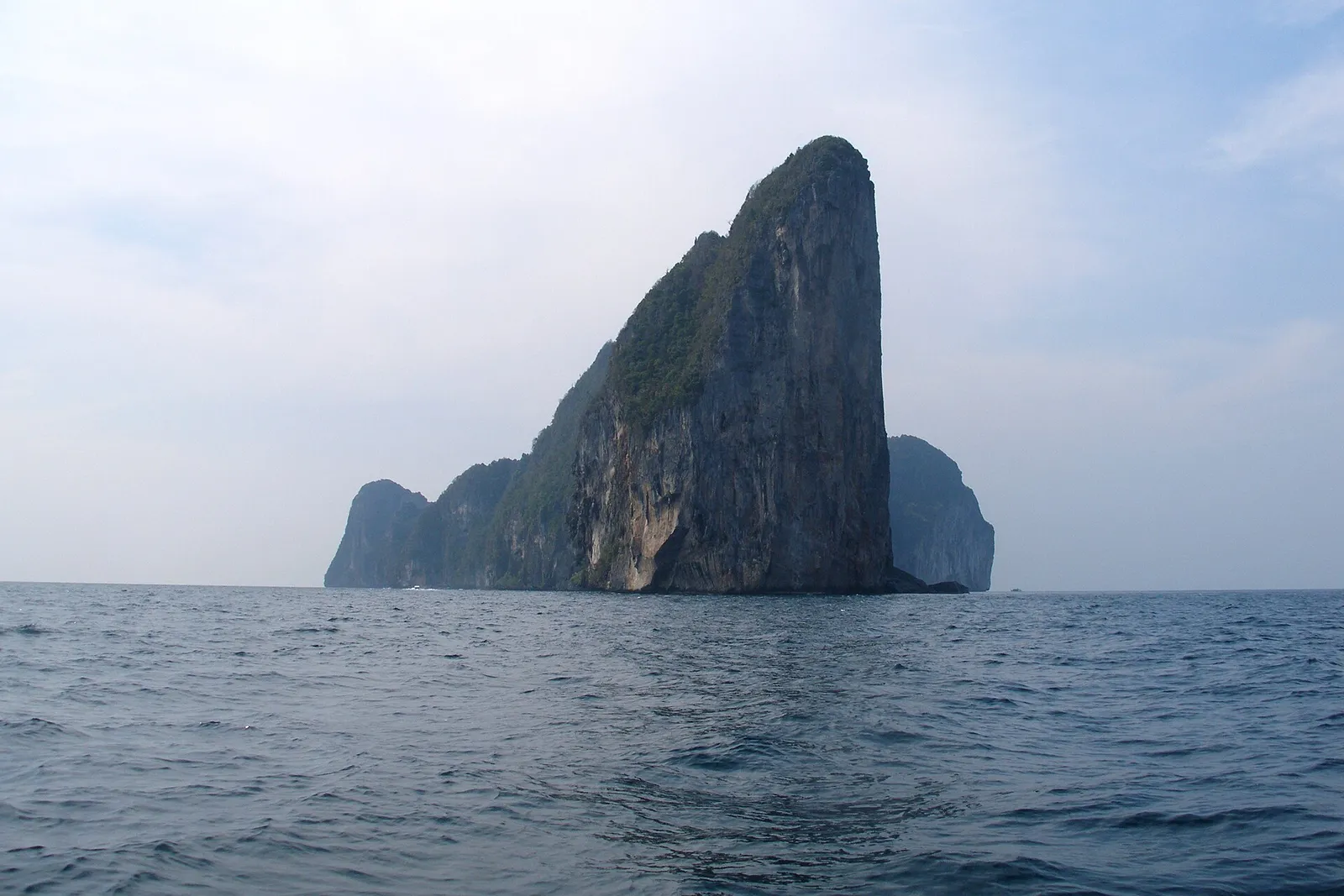
The ferry day tour from Rassada Pier to Phi Phi runs from mid-October to mid-April. Swimming is not allowed at Maya Bay.
Sea conditions change day by day, so ask your operator the day before you sail. Plan the rest of the trip with Phi Phi day trip.
What changes for a visitor
Beach days move to the dry months, from November to April, when monthly rain is at its lowest. In the wet months, plan town days instead: Phuket Old Town is a walk of streets, not a beach.
For a long stay, the rainy season means more cloud rather than a different temperature. See Where to live in Phuket to pick an area that suits your months.
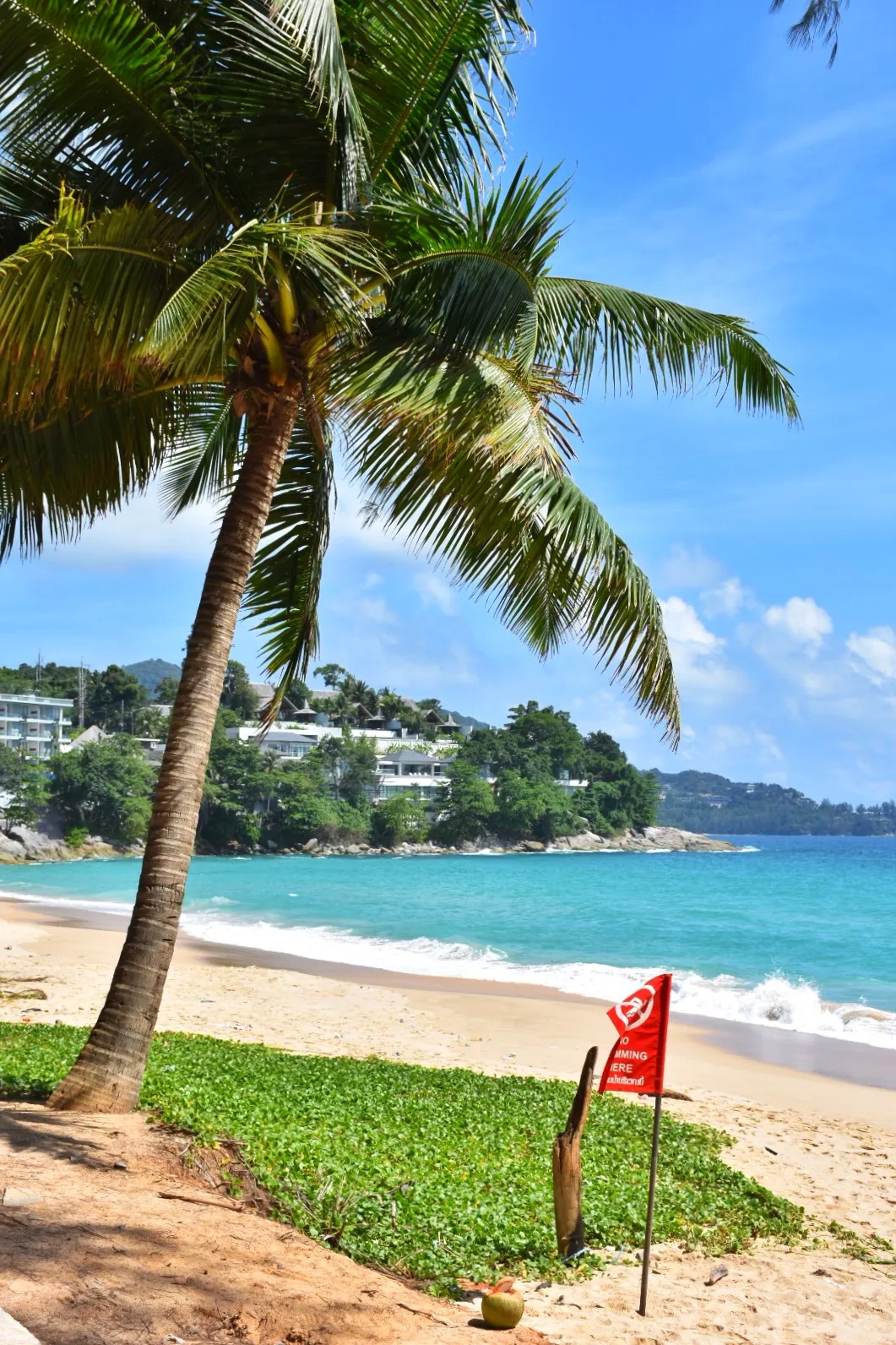
Photo credits
- Patong Bay under a cloudy sky: Wikimedia Commons, Patong Beach Phuket November 2012 (Arnaud-Victor Monteux, CC BY-SA 4.0) (opens in a new tab) (CC BY-SA 4.0 (Arnaud-Victor Monteux))
- Karon Beach: Wikimedia Commons, Karon Beach,Phuket (5) (Kasintorn Rachaorot, CC BY-SA 4.0) (opens in a new tab) (CC BY-SA 4.0 (Kasintorn Rachaorot))
- Kata Beach with Ko Pu on the horizon: Wikimedia Commons, Kata Beach view (HutheMeow, CC BY-SA 4.0) (opens in a new tab) (CC BY-SA 4.0 (HutheMeow))
- A limestone cliff on Ko Phi Phi Leh, seen from a boat: Wikimedia Commons, Ko Phi Phi Leh definitive vertical limestone cliff as seen from the water, Thailand (Vyacheslav Argenberg, CC BY 4.0) (opens in a new tab) (CC BY 4.0 (Vyacheslav Argenberg))
- The bay at Surin Beach seen from under a palm: Wikimedia Commons, Surin Beach, Phuket, Thailand 2016 (::::=UT=::::, CC BY-SA 3.0) (opens in a new tab) (CC BY-SA 3.0 (::::=UT=::::))
Step by step
- Pick your monthsThe rainy season runs around mid-May to mid-October, with September the wettest at 350.4 mm.
- Check the beach before you swimSwimming at Nai Harn is not recommended from May to October, and Surin Beach is not suitable for swimming in the monsoon season.
- Plan island tours for the dry monthsThe ferry day tour from Rassada Pier runs from mid-October to mid-April.
Not confirmed: Day-to-day sea conditions and boat cancellations: they change daily, so ask your operator the day before you sail.
Common questions
When is the rainy season in Phuket?
Around mid-May to mid-October, when the southwest monsoon covers Phuket.
Which month is the wettest?
September, with 350.4 mm of rain on 21.7 days.
How much rain does Phuket get in a year?
About 2271.5 mm on 174.9 rainy days.
Is it dry from November to April?
Monthly rain falls to 49.9 mm in January and 24.0 mm in February. The northeast monsoon season brings little rain.
Can I swim at the beaches in the monsoon?
Swimming at Nai Harn is not recommended from May to October because of strong current. Surin Beach is not suitable for swimming in the monsoon season.
Do the Phi Phi ferry tours run in the rainy season?
The ferry day tour from Rassada Pier runs from mid-October to mid-April.
Is it hot in the rainy season?
Monthly average temperatures stay between 27.6 and 29.6 C all year.
Read next
General information checked against the sources listed above, not legal advice for your situation. Rules and office practice change; confirm with the immigration office or a licensed adviser before you act. See how guides are checked.
Spotted an error? Report it.
Comments (0)
Be the first to ask about this topic.